

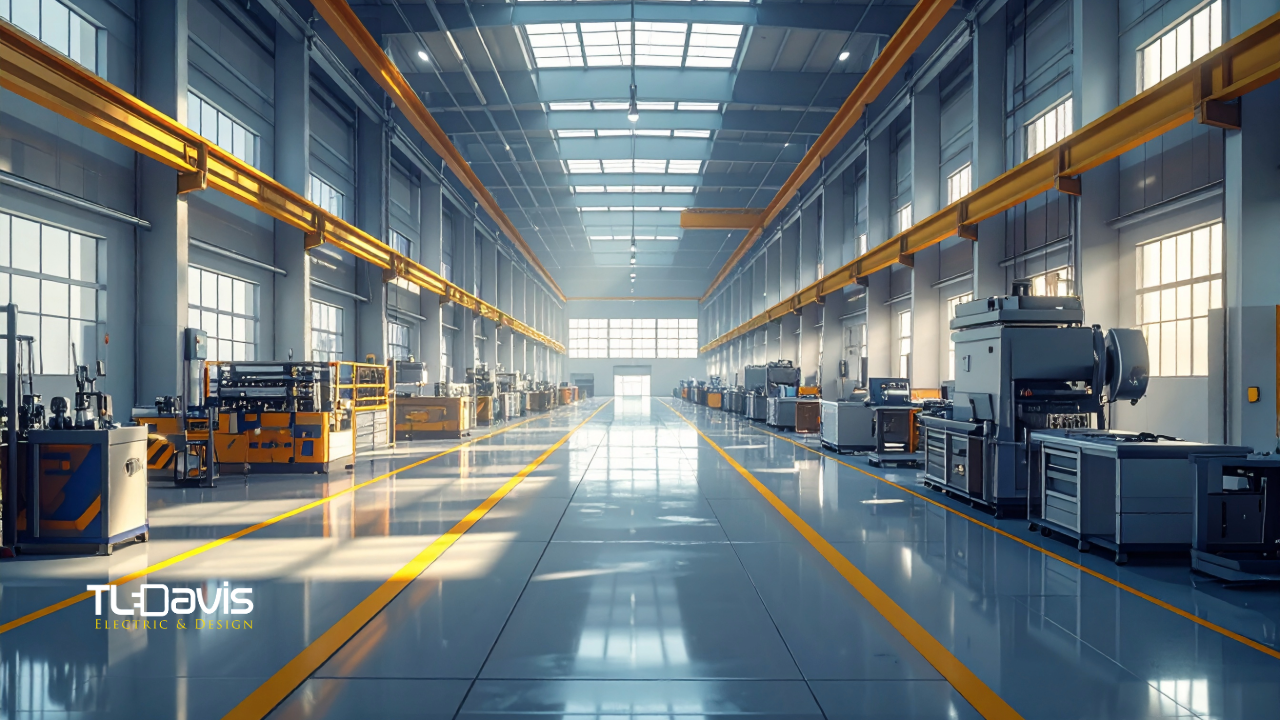
Manufacturing facilities across Tulsa rely on nonstop electrical power to keep production lines moving. When machines shut down unexpectedly, even for a few minutes, the entire operation comes to a halt. Production delays, scrap material, damaged components, and employee downtime cost businesses thousands of dollars. I am Terry Davis, Master Electrician, and I have been helping Tulsa manufacturing plants identify and fix electrical problems that cause repeated machine shutdowns.
If your CNC machines, assembly lines, compressors, welders, or automated systems are shutting down or restarting without warning, there is an electrical issue behind it. Here is what I see most often.
Why Machine Shutdowns Happen In Tulsa Manufacturing Plants
Heavy Electrical Demand On Aging Infrastructure
Many manufacturing facilities in Tulsa operate with electrical systems that were installed decades ago. These older panels, feeders, and circuits were never designed for modern automation, robotics, or CNC machinery. When high demand equipment runs simultaneously, it stresses the entire system.
Voltage Drops And Electrical Instability
Large motors and compressors draw massive startup currents. When they cycle on, they can pull the voltage down across the entire manufacturing floor, causing other equipment to:
• restart
• freeze
• lose calibration
• shut down mid cycle
This is one of the most common reasons I get called to manufacturing floors across Tulsa.
Weak Or Worn Out Breakers
Manufacturing equipment places heavy load cycles on breakers. Over time, breakers weaken and trip prematurely or fail to hold steady voltage. Weak breakers cause shutdowns even if machines are operating within their rated load.
Loose Or Corroded Connections
Heat, vibration, dust, and oil cause wiring connections to loosen or corrode inside:
• panels
• MCC rooms
• control cabinets
• breaker boxes
• junction boxes
Loose wiring increases resistance, resistance creates heat, and heat leads to erratic machine behavior and unexpected shutdowns.
Overloaded Circuits
Manufacturing floors evolve constantly. New machines are added, old systems are repositioned, and space is repurposed. Too often, equipment is added without upgrading the underlying circuits. This overloads the branch circuits and creates unstable power.
Failing Control Power Supplies
PLC systems, VFDs, and automation controllers rely on stable low voltage control power. When these power supplies weaken or voltage drops occur, the control side of the system fails first — often shutting down the machine before the main motors are affected.
Warning Signs That Machine Shutdowns Are Electrical
Machines Reset When Large Motors Start
This means voltage drop is spreading across the entire building.
Equipment Freezes Or Stops Mid Cycle
This often indicates control voltage instability or a failing breaker.
Random Fault Codes On CNC Or Automated Equipment
Many “mechanical” faults are actually caused by inconsistent electrical supply.
Breakers Feel Warm Or Trip Repeatedly
This is a major sign that circuits are overloaded or wiring is loose.
Lights Flicker When Machines Start
Lighting flicker in a manufacturing environment almost always points to an electrical system under strain.
Unexplained Production Line Variations
Motors running slower than usual or conveyors hesitating are electrical symptoms.
Hidden Risks Of Ignoring Manufacturing Shutdowns
Equipment Damage
Running high tech manufacturing equipment on unstable voltage leads to:
• burned out motors
• fried boards
• failed power supplies
• corrupted PLC programs
• miscalibrated CNC systems
These repairs are costly and avoidable.
Lost Production
Even a single shutdown can ruin entire batches or halt the line for hours.
Safety Hazards
Machine shutdowns can create pinch points, unexpected stops, and uncontrolled movements that put employees at risk.
Higher Energy Costs
Machines running under voltage pull higher current, increasing energy consumption.
How I Fix Machine Shutdown Problems In Tulsa Facilities
Step One: Power Quality Testing
I test voltage stability during machine startup, operation, and shutdown. This reveals hidden voltage drop patterns that cause intermittent failures.
Step Two: Inspect Panels And MCC Rooms
I check for:
• loose lugs
• overheated bus bars
• weak breakers
• mismatched fuse sizes
• dust buildup
• corrosion
• improper torque on feeders
Most problems reveal themselves here.
Step Three: Evaluate Equipment Circuits
I inspect wiring size, length of runs, and load distribution to ensure each machine has the electrical support it needs.
Step Four: Install Dedicated Circuits Or Subpanels
If machines share circuits or feeder runs that are too long, I install new circuits with proper wire gauge or add subpanels to supply stable power closer to the load.
Step Five: Replace Failing Breakers Or Components
Any weak, worn out, or overheating breaker must be replaced to stabilize machine operation.
Step Six: Improve Control Power Reliability
I check power supplies, grounding, bonding, and control wiring to ensure PLCs and automation systems receive stable voltage.
Why Manufacturing Plants Should Address Shutdowns Immediately
The longer unstable power continues, the more damage it causes. Ignoring shutdowns results in:
• increasing downtime
• burned out motors
• lost revenue
• trapped inventory
• equipment strain
• unsafe working conditions
Tulsa manufacturing plants cannot operate efficiently without stable, clean electrical power.
If Your Tulsa Manufacturing Machines Are Shutting Down, I Can Help
I’ve helped manufacturing plants across Tulsa stabilize their electrical systems and eliminate machine shutdowns that were costing them thousands of dollars. Whether it’s voltage drops, weak breakers, overloaded circuits, or control power issues, I can diagnose the root cause and get your production line running smoothly again.
Your machinery should work for you, not against you. I can help you keep it that way.